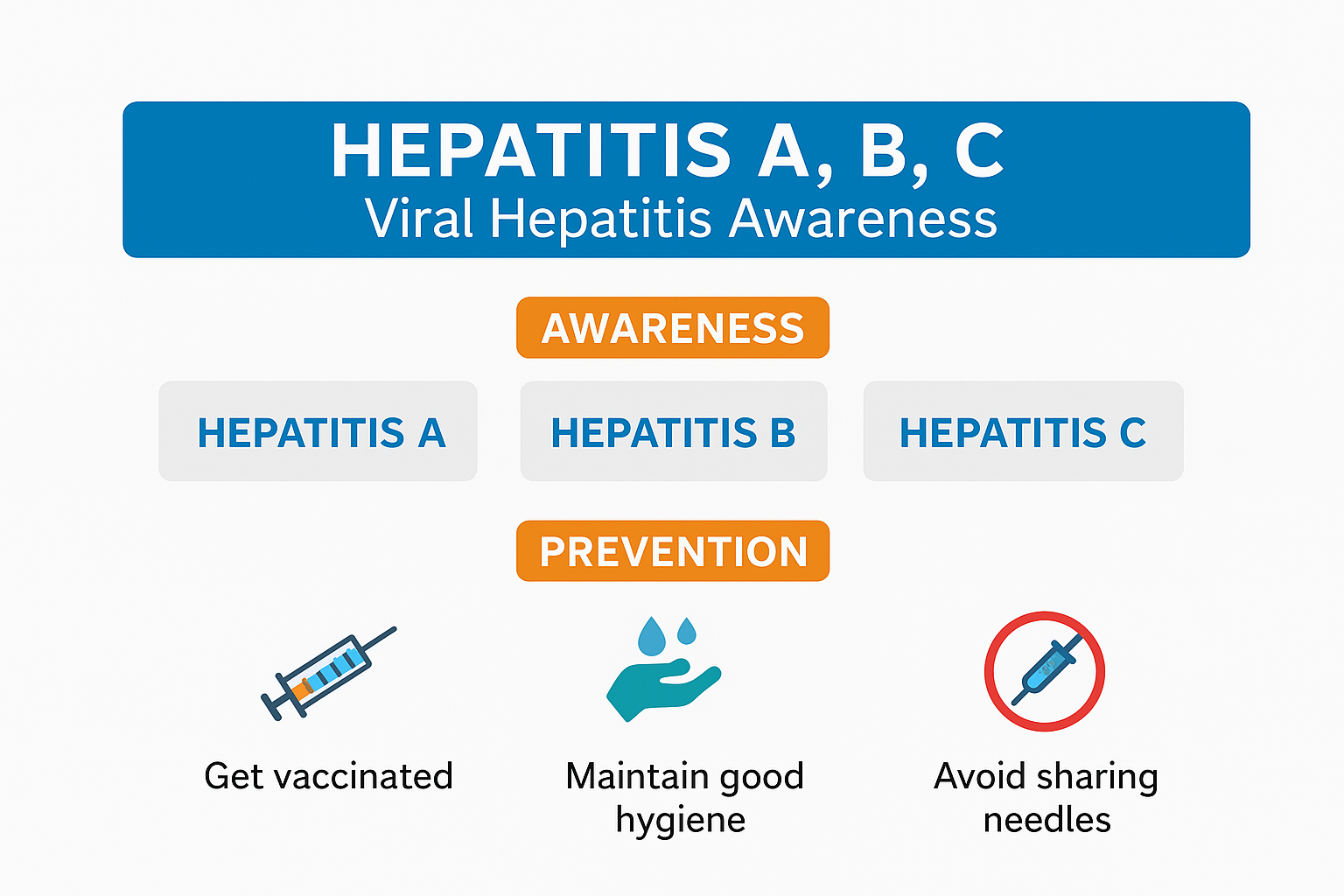
Hepatitis A, B, C – Viral Hepatitis Awareness
- 12 Sep 2025
- 0 Comments
- Hepatitis Awareness, Liver Care, Vaccination

Hepatitis A, B, C - Awareness and Prevention of Viral Hepatitis
Introduction
Hepatitis is an inflammation of the liver, most commonly caused by viral infections. The liver is a vital organ that plays an essential role in detoxifying the body, producing important proteins, and supporting digestion. When the liver becomes infected, its functions are disrupted, leading to serious health issues. Among the different types of hepatitis, Hepatitis A, B, and C are the most common and dangerous worldwide. In Pakistan, hepatitis has become a major public health problem. Millions of people are living with the infection, often without realizing it, because the disease may remain silent for years. Awareness, timely diagnosis, and prevention are crucial to controlling its spread.
Understanding Hepatitis A, B, and C
Hepatitis A
-
Caused by the Hepatitis A virus (HAV).
-
Usually spreads through contaminated food and water.
-
Mostly acute (short-term) and does not lead to chronic disease.
-
Preventable with vaccination and good hygiene practices.
Hepatitis B
-
Caused by the Hepatitis B virus (HBV).
-
Transmitted through blood, unprotected sexual contact, sharing needles, or from mother to child during birth.
-
Can be both acute and chronic. Chronic infection may lead to cirrhosis or liver cancer.
-
Preventable with vaccination.
Hepatitis C
-
Caused by the Hepatitis C virus (HCV).
-
Primarily spreads through infected blood (unsafe transfusions, unsterilized medical equipment, sharing razors/needles).
-
No vaccine available, but it is curable with antiviral medicines if diagnosed early.
-
Chronic cases may cause severe liver damage or cancer.
Symptoms of Viral Hepatitis
Symptoms may not appear in the early stages, but when they do, they include:
-
Fatigue and weakness
-
Yellowing of skin and eyes (jaundice)
-
Loss of appetite
-
Nausea and vomiting
-
Abdominal pain
-
Dark urine and pale stools
-
Joint pain
Prevention of Hepatitis A, B, and C
For Hepatitis A:
-
Drink clean and filtered water.
-
Wash hands before eating and after using the toilet.
-
Avoid eating unhygienic street food.
-
Get vaccinated.
For Hepatitis B:
-
Get the Hepatitis B vaccine.
-
Avoid sharing razors, toothbrushes, or needles.
-
Ensure safe blood transfusions.
-
Practice safe sex and avoid multiple partners.
-
Pregnant women should get tested to prevent mother-to-child transmission.
For Hepatitis C:
-
No vaccine available, so prevention is critical.
-
Always use sterilized medical equipment.
-
Avoid unsafe blood transfusions.
-
Do not share needles, syringes, or personal items like razors.
-
Regular screening for early detection.
Conclusion
Hepatitis A, B, and C are among the most dangerous viral infections affecting the liver, yet much of their spread can be prevented through awareness, vaccination, and safe practices. While Hepatitis A and B can be controlled with vaccines, Hepatitis C requires early detection and timely medical treatment to avoid severe complications. In Pakistan and many other countries, the lack of awareness, poor sanitation, and unsafe medical practices contribute to rising cases. Every individual must take preventive measures, encourage regular checkups, and support awareness campaigns. Protecting yourself and your loved ones against hepatitis is not only a personal responsibility but also a step toward building a healthier society.